I remember the exact moment this concept clicked for me. We were developing an RPG with standard progression systems experience points, skill trees, the usual mechanics. During testing, a player asked something that stumped our entire team: “Why does my character feel exactly like everyone else’s by endgame?”
She was right. Despite dozens of choices throughout the campaign, characters converged toward similar endpoints. The illusion of growth existed, but genuine evolution didn’t.
That question sent me down a rabbit hole exploring procedural character growth powered by AI, and what I discovered fundamentally changed my approach to character system design.
Beyond Traditional Progression Systems

Most games handle character growth through predetermined pathways. You earn points, allocate them to predefined skills, and watch numbers increase. It works. Players understand the systems intuitively. But it’s ultimately mechanical rather than organic.
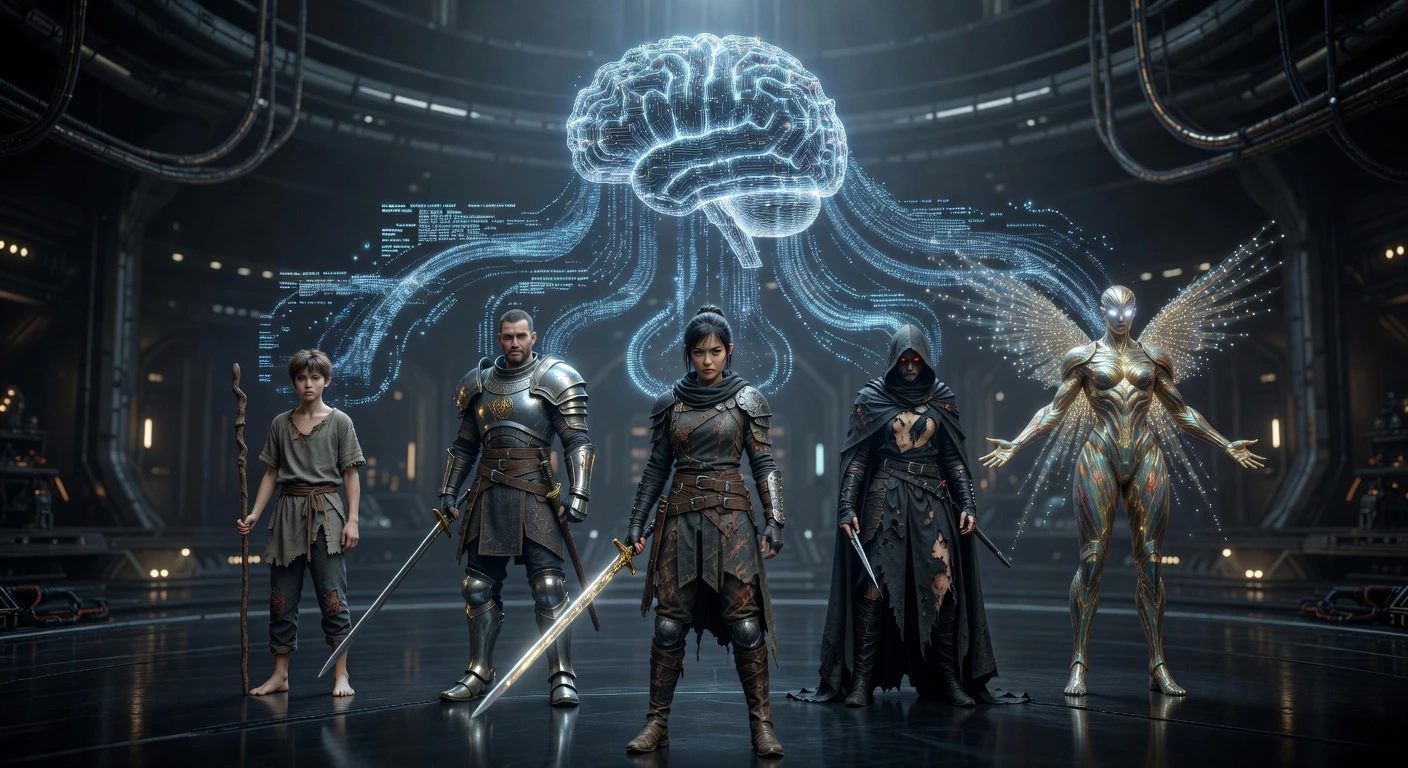
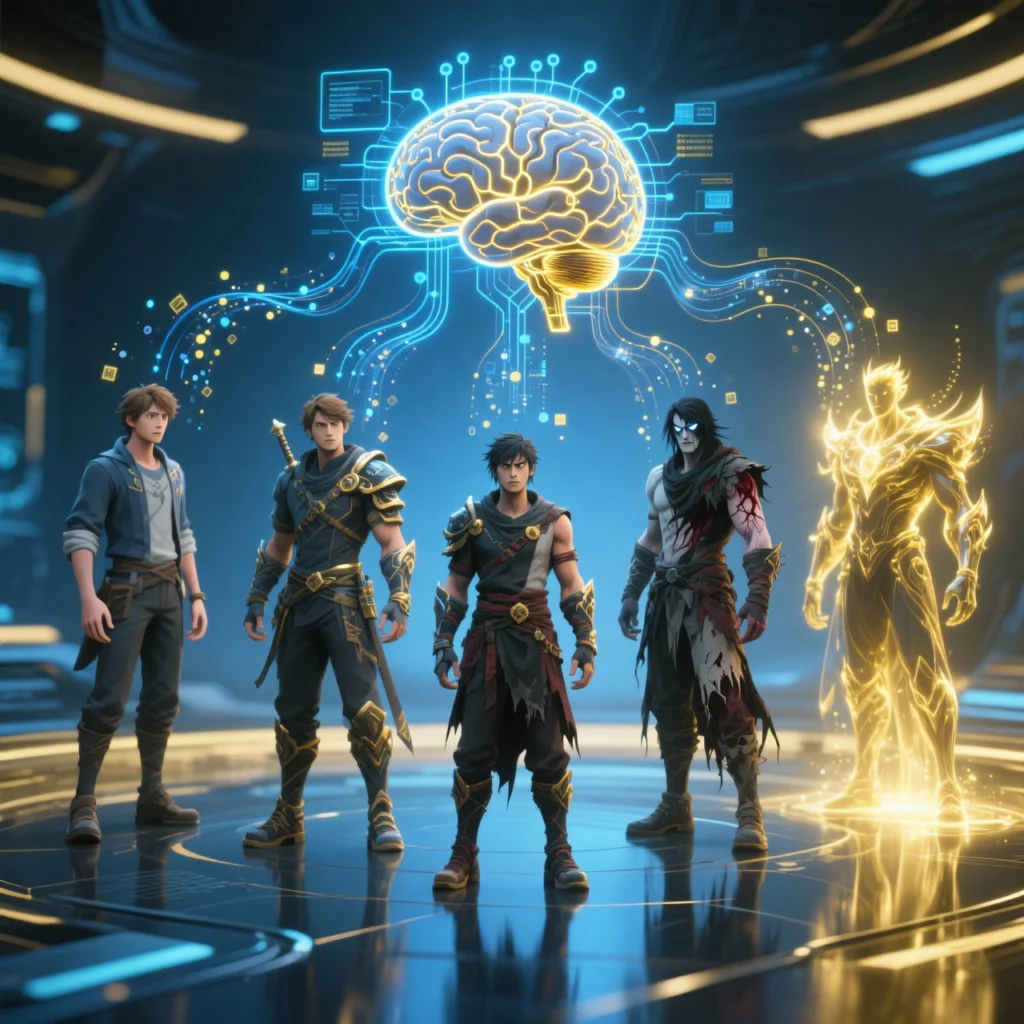
Procedural character growth using AI operates on different principles entirely. Instead of selecting from fixed options, characters develop dynamically based on how players actually engage with them. The system observes, learns, and generates growth trajectories that feel unique to each playthrough.
Think about how real people develop skills. You don’t wake up deciding to allocate three points into cooking. You practice, fail, improve, and eventually become competent through accumulated experience. AI driven procedural growth attempts to mirror this organic development within game systems.
How These Systems Function

The technical implementation varies across projects, but core concepts remain consistent.
Behavioral tracking forms the foundation. The AI monitors everything combat approaches, dialogue choices, movement patterns, item usage, even time spent on particular activities. This data builds a behavioral profile unique to each player’s character.
Pattern recognition identifies tendencies within this data. Does the player favor ranged combat? Do they exhaust dialogue options before fighting? Do they explore thoroughly or rush objectives? These patterns inform how the character evolves.
Procedural generation then creates growth outcomes matching observed behaviors. Instead of unlocking predetermined abilities, the system generates skills, traits, and characteristics that feel earned through actual play.
I worked on a prototype where characters developed combat styles based on weapon usage patterns. A player who consistently attacked from behind developed backstab-related abilities we never explicitly designed. The AI recognized the pattern and generated appropriate growth. Watching it happen felt almost magical.
Emergent Personality Development
What excites me most about this technology isn’t combat statistics it’s personality evolution.
Traditional games assign fixed personalities to characters. Geralt is Geralt regardless of player choices. Some games offer good/evil meters or reputation systems, but these remain surface-level adjustments to predetermined personalities.
Procedural AI systems can generate genuine personality shifts based on accumulated decisions. A character who consistently shows mercy develops different dialogue options, relationship dynamics, and emotional responses than one who chooses violence. Not because writers scripted both paths, but because the AI generates appropriate personality expressions.
This creates characters that feel authentically shaped by player behavior. The connection between action and character becomes tangible rather than mechanical.
Current Applications Worth Examining
Several projects have explored these concepts with varying success.
Dwarf Fortress remains the gold standard for emergent character development. Its dwarves develop personalities, relationships, and psychological conditions through simulated experiences. A dwarf who witnesses trauma might develop depression or rage. One who creates masterwork art might become arrogant. None of this is scripted it emerges from systemic interaction.
Rimworld implements similar concepts with its colonist psychology. Characters develop traits, mental breaks, and relationship dynamics based on lived experiences within the simulation. Players share stories about colonists who feel like genuine individuals because their development emerged organically.
Middle earth Shadow of Mordor’s Nemesis system, while focused on enemies rather than protagonists, demonstrates procedural character development principles. Orcs remember encounters, develop grudges or fears, gain scars from battles, and evolve based on player interactions. Each player’s nemesis feels personal because they developed through actual engagement.
The Design Challenges
I won’t pretend this approach lacks significant hurdles. Several have frustrated me personally throughout various projects.
Balance becomes exponentially complicated. When characters can develop in countless directions, ensuring no growth path becomes dramatically superior requires extensive testing and sophisticated tuning systems. Some projects I’ve seen abandoned procedural growth partly because balancing proved unmanageable.
Narrative integration presents difficulties too. Writers can’t script specific character moments when they don’t know who that character will become. This requires either very flexible narrative systems or accepting that story and character growth operate somewhat independently.
Player readability sometimes suffers. With fixed progression, players understand exactly how to build toward desired outcomes. Procedural systems can feel opaque. Why did my character develop this ability and not that one? Communication becomes critical and tricky.
Where Human Design Remains Essential
Despite my enthusiasm for this technology, I’ve learned that human creativity cannot be extracted from the equation.
AI systems need carefully designed boundaries. Without constraints, procedural generation produces incoherent results. Defining what kinds of growth make sense for particular characters, settings, and narratives requires human judgment.
Emotional resonance still demands human craft. AI can generate logical character development, but creating moments that genuinely move players requires understanding human emotion in ways current technology doesn’t achieve. The most successful implementations combine procedural flexibility with carefully authored emotional beats.
Quality control remains necessary throughout. Even sophisticated systems produce occasional nonsense. Human oversight catches problems before they reach players.
Ethical Dimensions
The capacity to model and shape player behavior raises legitimate concerns.
These systems learn player psychology to generate engaging character growth. That same capability could theoretically manipulate players toward unwanted behaviors or exploit psychological vulnerabilities. Establishing ethical boundaries around player modeling matters enormously.
Data collection necessary for these systems also deserves scrutiny. Players should understand what behavioral information games gather and how it’s used. Transparency builds trust that secretive implementation undermines.
Looking Ahead
The trajectory points toward increasingly sophisticated procedural character growth. Within the next few years, I expect these systems to become standard features rather than experimental novelties.
The dream scenario characters that feel genuinely alive, that develop uniquely for each player, that remember and respond to accumulated history feels achievable now. Not perfectly, not universally, but achievably.
What started with that playtester’s question years ago has become central to how I approach character design. The characters we create don’t need to be static. They can grow, change, and surprise us. And that’s genuinely exciting.
Frequently Asked Questions
What is procedural character growth?
Character development that emerges dynamically from gameplay rather than following predetermined progression paths, creating unique evolution for each playthrough.
How does AI enable procedural character development?
AI tracks player behavior, identifies patterns, and generates appropriate growth outcomes including skills, traits, and personality characteristics matching observed play styles.
Which games currently use procedural character growth?
Dwarf Fortress, Rimworld, and Shadow of Mordor demonstrate various aspects. Many studios are developing more sophisticated implementations for upcoming titles.
Does procedural growth replace traditional leveling systems?
Usually it supplements rather than replaces them. Hybrid approaches combining procedural elements with traditional structures often prove most effective.
Can procedural systems create unbalanced characters?
Yes, balance remains challenging. Sophisticated tuning and constraints help prevent dramatically superior or inferior growth paths.
Will this technology work for multiplayer games?
Implementation is more complex but possible . Ensuring fair competition while allowing unique character development requires careful design consideration.